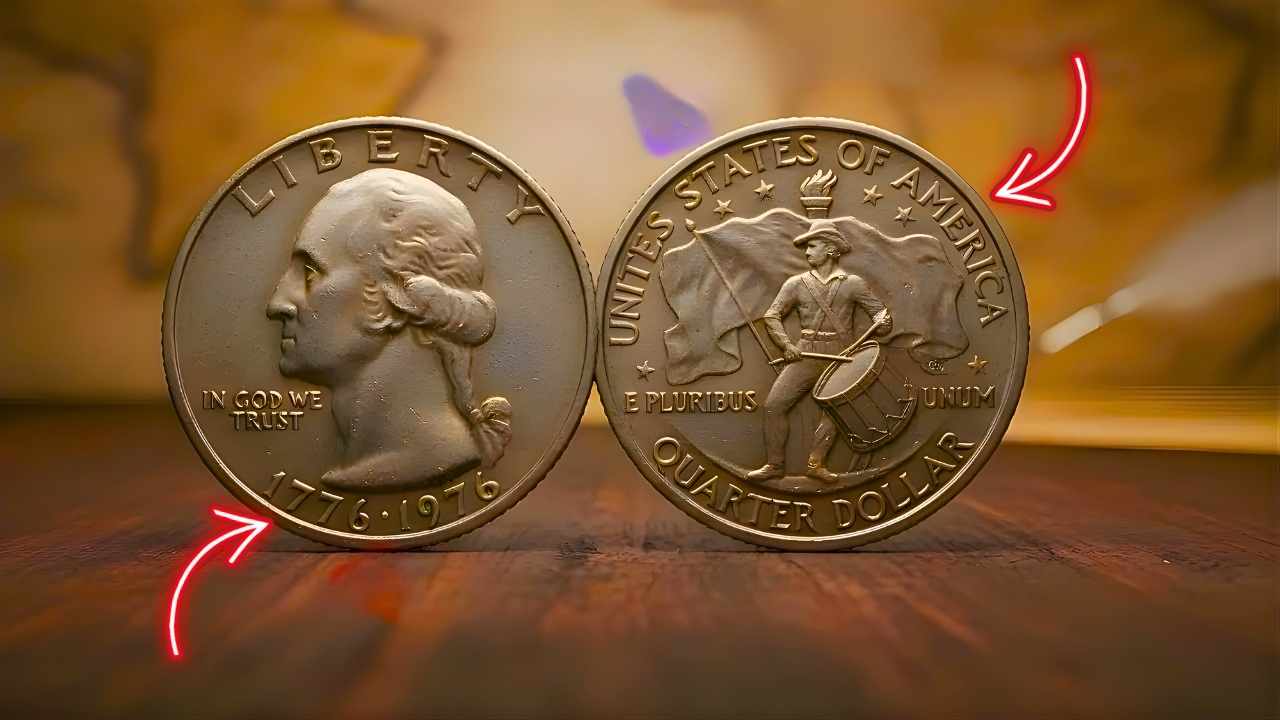
The United States has produced countless coins over its long history, but few have captured the imagination of collectors like the 1976 Bicentennial quarter. Issued to celebrate the 200th anniversary of the Declaration of Independence, this coin is not just a piece of currency—it is a symbol of American history. Recently, reports have surfaced about a rare version of this quarter valued at an astonishing $3.2 million, sparking excitement among collectors and the general public alike. This discovery has led many to wonder if they might unknowingly have this rare coin in their pocket change.
In this article, we will explore the history of the Bicentennial quarter, what makes this rare coin so valuable, and tips on how to identify it if you come across one.
The History of the Bicentennial Quarter
The Bicentennial quarter was first issued in 1975 to commemorate the 200th anniversary of the United States’ independence. Unlike regular quarters, the Bicentennial quarter features a unique reverse design, displaying a colonial drummer and the dual date “1776–1976.” This design was created by Jack L. Ahr, who aimed to celebrate the spirit of the American Revolution.
Millions of these quarters were minted, making them a common sight in circulation. However, within these millions of coins, some rare variations exist that are highly sought after by collectors. These rare versions often differ in minute details such as mint marks, die errors, or striking techniques.
The sheer volume of Bicentennial quarters in circulation makes finding one of these rare versions incredibly exciting. Many collectors and enthusiasts now scour their daily change in hopes of uncovering a valuable coin.
What Makes the $3.2 Million Quarter So Rare?
Not all Bicentennial quarters are created equal. The quarter valued at $3.2 million is considered extremely rare due to a combination of factors. First, its production included a unique minting error that occurred at the Denver Mint. This error made the coin exceptionally different from standard Bicentennial quarters.
Collectors value coins based on scarcity, historical significance, and condition. A coin that is not only rare but also in pristine condition can fetch astronomical prices at auctions. The $3.2 million quarter meets all these criteria, making it one of the most coveted coins in modern U.S. numismatics.
Another factor that increases its value is provenance. Coins with a documented history, such as being part of a famous collection or discovered in a unique circumstance, often sell for much higher prices. The combination of rarity, error type, and condition has made this particular quarter a true treasure in the world of coin collecting.
How to Identify a Rare Bicentennial Quarter
For anyone interested in checking their change for a potential treasure, there are a few key indicators that can help identify a rare Bicentennial quarter. First, examine the reverse side of the coin for subtle differences in the design. These differences could include variations in the drummer’s drum, misalignment of the dual dates, or unusual markings that were not part of the standard issue.
Next, inspect the mint mark, which is located on the obverse side of the coin near George Washington’s portrait. Rare errors sometimes involve missing or doubled mint marks. Additionally, the coin’s edge should be examined carefully; errors in edge lettering or reeding can significantly increase value.
Finally, condition is critical. Coins that have been kept in uncirculated condition or preserved in a protective case are far more valuable than those showing wear and tear. If you find a coin that matches these descriptions, it is wise to have it appraised by a professional numismatist.
Why Collectors Are Excited
The news of a $3.2 million Bicentennial quarter still circulating has reignited interest in coin collecting. Even casual collectors are now paying closer attention to the coins they encounter daily. This excitement is not only about potential monetary gain but also about connecting with a piece of history.
Collectors are drawn to the thrill of discovery. Finding a rare coin in everyday change is a tangible link to the past and a reminder that even ordinary objects can hold extraordinary value. Coin collecting has long been a hobby that combines history, art, and economics, and the discovery of a coin this rare brings all of these elements together.
Key Highlights
- The 1976 Bicentennial quarter was issued to celebrate America’s 200th anniversary.
- A rare variation of this quarter, valued at $3.2 million, is still circulating.
- Factors that increase the coin’s value include minting errors, condition, and historical significance.
- Collectors can identify rare coins by examining design details, mint marks, and edge characteristics.
- Finding a rare coin is not only financially rewarding but also a connection to history.
Our Final Words
The discovery of a $3.2 million Bicentennial quarter serves as a reminder that valuable treasures can be hiding in plain sight. While the chances of finding one may be slim, the excitement lies in the possibility. For those who enjoy coin collecting or simply want to examine their daily change with curiosity, the story of this rare quarter adds a new layer of intrigue to an everyday object.
Even if you do not uncover a multi-million-dollar coin, exploring coins can be a fun and educational hobby. It offers insights into history, craftsmanship, and the stories behind each minting year. So next time you receive change, take a moment to look closely—you might just stumble upon a piece of history worth far more than its face value.